
Hi all! My name is Dr. Gonzalez and I am a Doctor of Physical Therapy with a specialty in pelvic health.
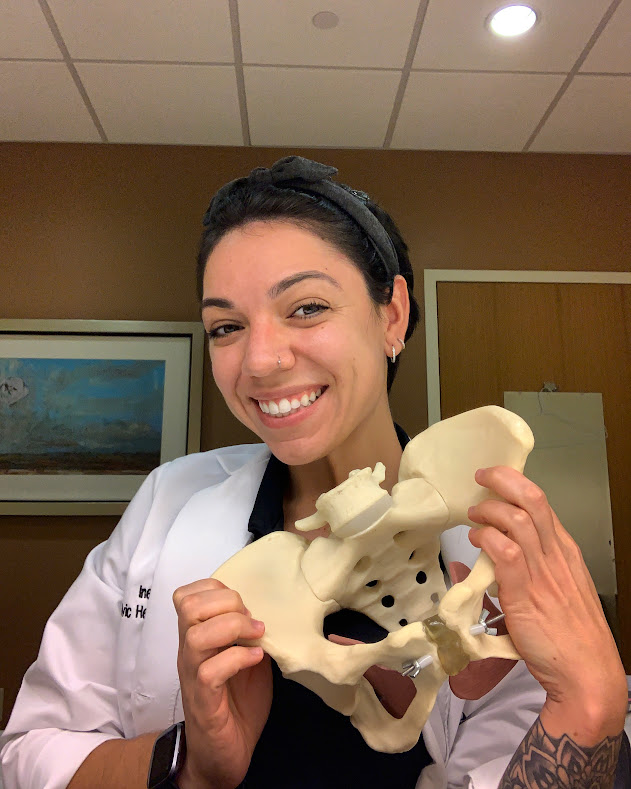
I often am asked, “What does this kind of physical therapy entail?”
Let me explain.
Pelvic health physical therapy was founded in 1977 and was formerly called Section on Women’s Health of the American Physical Therapy Association. At that time, Women’s Health PT was focused on treating prenatal, pregnancy, and postpartum patients.
Since then, the field has greatly expanded and is now known as the Academy of Pelvic Health Physical Therapy and our focus is to treat women, men, and children with any pelvic or core dysfunctions.
Pelvic and Core Dysfunctions Include:
- Urinary/Bowel Incontinence
- Urinary urgency/frequency
- Constipation
- Pelvic Pain
- Pain with intercourse
- Endometriosis
- Interstitial Cystitis
- Pregnancy
- Postpartum
- Prolapse
- Diastasis Recti (abdominal separation)
Treatment
Evaluation:
Your pelvic PT will ask your consent for a pelvic floor muscle assessment.
This type of assessment is an external and internal assessment (don’t freak out!!!) using a single digit (no scary speculum) either vaginally or rectally to determine the strength and tone of your pelvic floor muscles. See my other blog post on what to expect at a Pelvic PT Evaluation for more information.
You can also expect a full body movement analysis and testing for strength and flexibility of the core, legs, and postural muscles.
Your future appointments will include:
Exercise: To improve muscle balance and strength of pelvic floor and core muscles.
Manual therapy: External or internal to release muscle tension and improve awareness of muscles.
Dilator or Pelvic Wand Training: To improve muscle elasticity and decrease pain.
Electrical stimulation (TENS) : To decrease pain and muscle spasms
Education: On the present condition, overall health, problem solving activity modifications during rehab.
Home Exercise Program: Homework tailored to your needs.
Everybody’s treatment will look different and may or may not involve all components listed above.
If you have any questions on what is considered a pelvic floor dysfunction or want to know more about treatment options, leave a comment below.